
Wedding venue audio design and network redesign improved the operating infrastructure of a new hall and the entire seven-storey building. The project went beyond designing sound for a new space: it addressed recurring costs, file management, video and audio connectivity, and the capabilities of the people operating the systems.
Project Overview
As a new hall was developed within a seven-storey wedding venue, we designed its audio system, network equipment and integrated media and audio control structure. Alongside equipment for the new space, we reorganized the building-wide infrastructure with future refurbishment of the two existing halls in mind.
ONSTAZ treated fragmented internet services, shared folders hosted on individual PCs, limitations on distributing AV between floors, and the burden of equipment operation for non-specialist staff as a single operational challenge. We retained usable wired signal paths and introduced network-based flexibility into the shared building infrastructure.
Key Outcomes
| Area | Before | After |
|---|---|---|
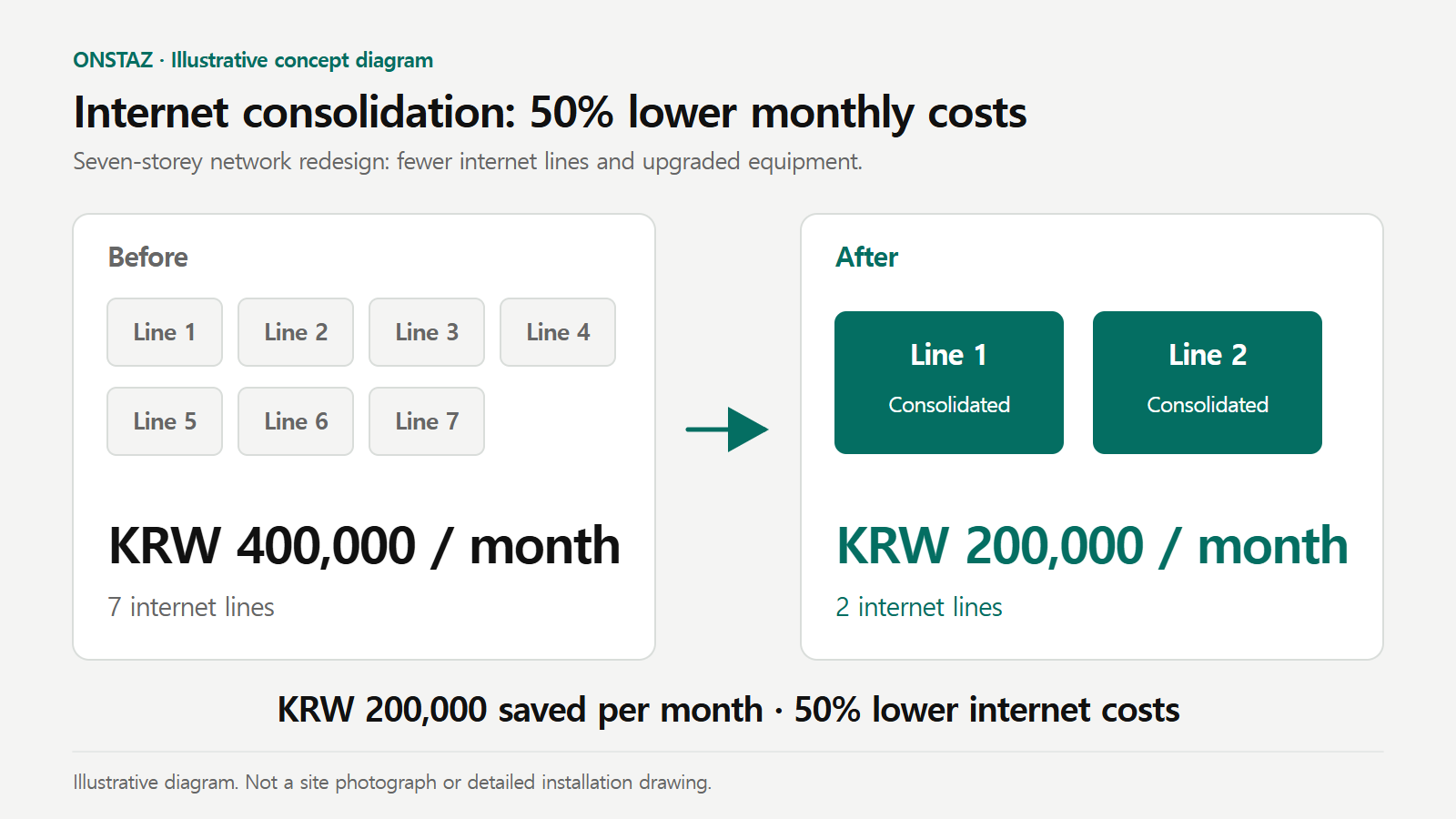
| Internet lines | Seven separate lines | Consolidated into two lines |
| Monthly internet costs | KRW 400,000 | KRW 200,000 — saving KRW 200,000 per month, or 50% |
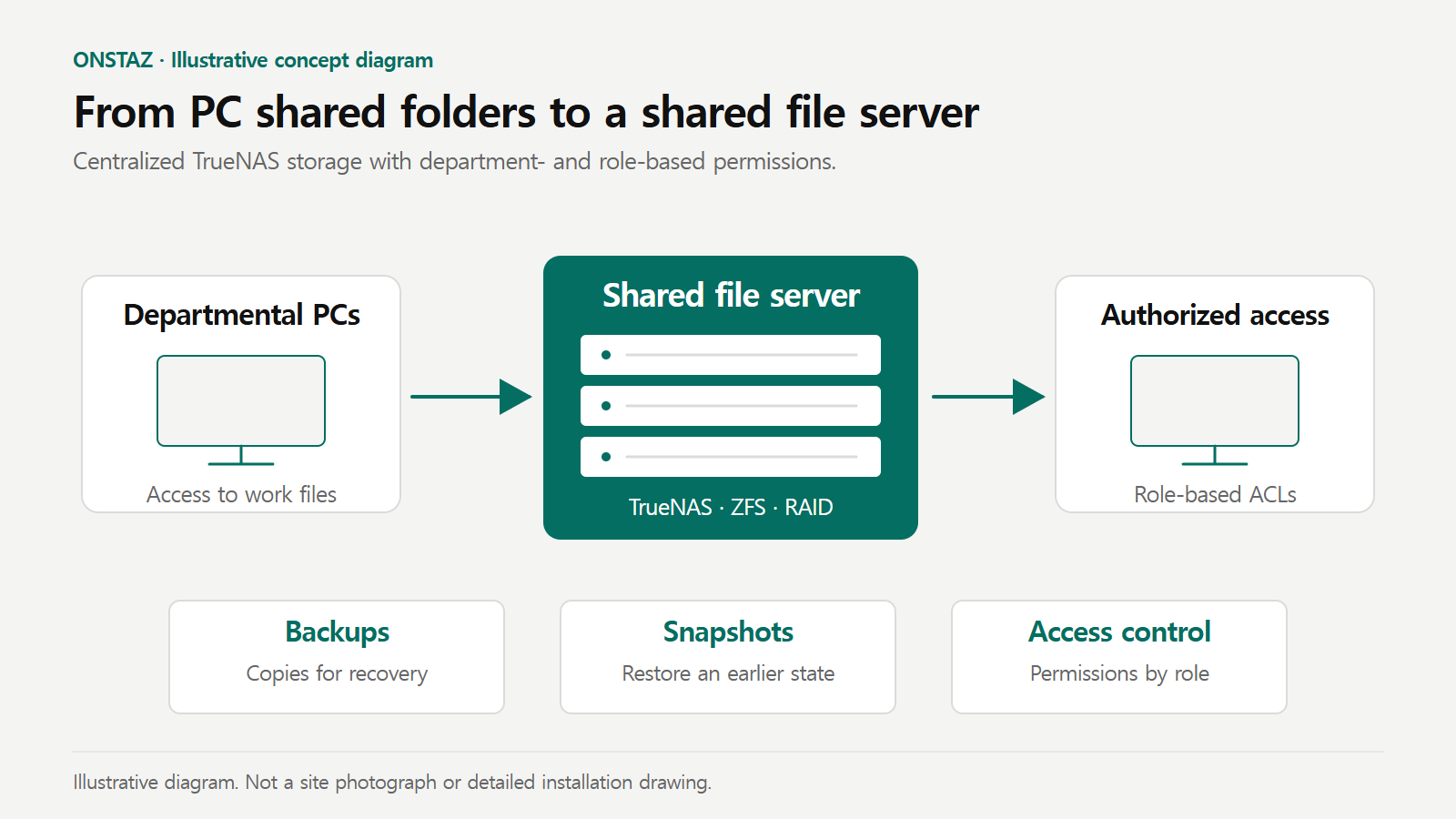
| Business file management | Shared folders hosted on departmental PCs | Migrated to a shared TrueNAS file server |
| Data protection and access | Limited backup, recovery and permission management | Backups, snapshots, ZFS, RAID and department- and role-based ACLs |
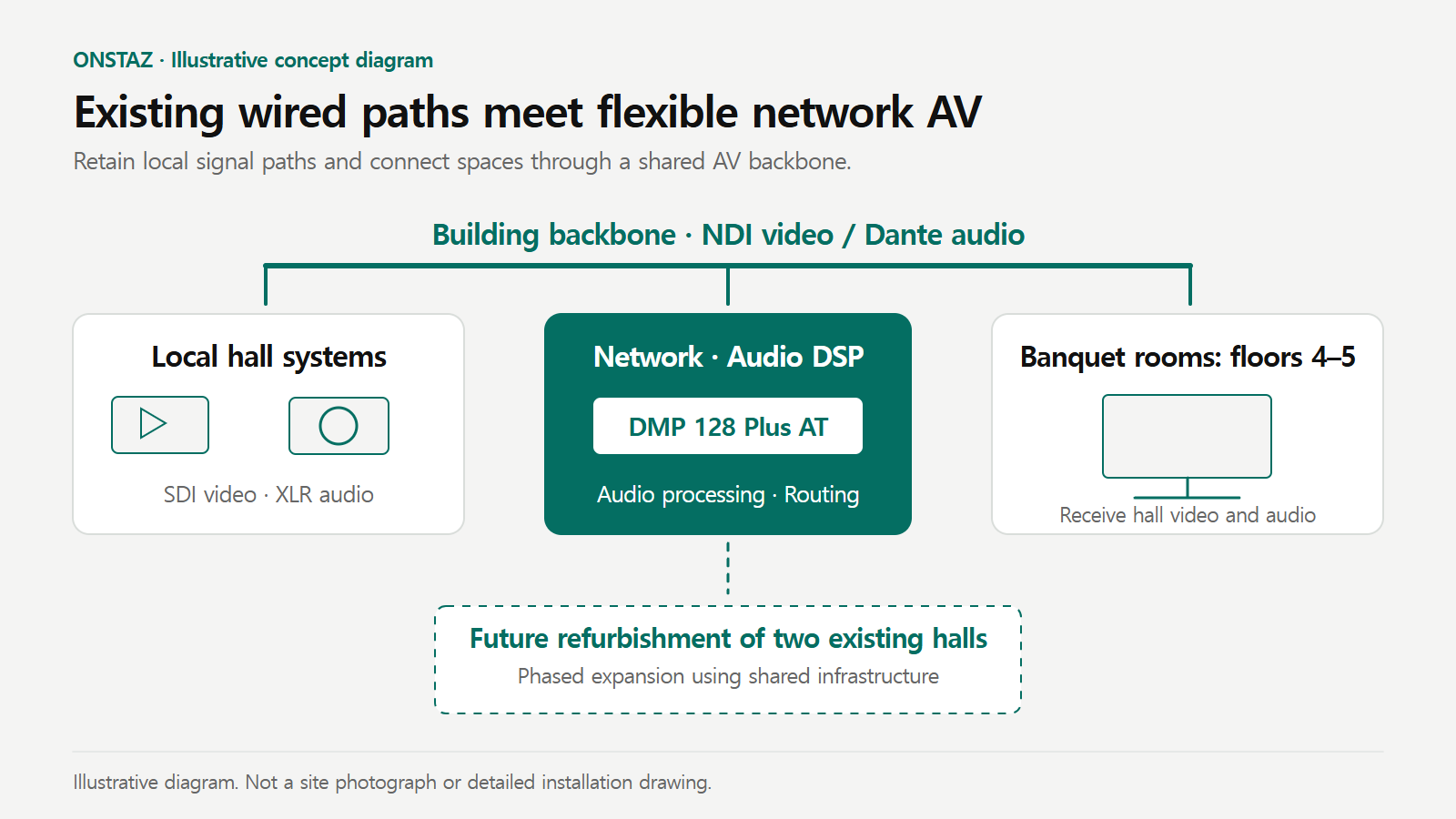
| AV expansion strategy | Individual halls and existing cabling | Usable wired paths combined with shared NDI and Dante infrastructure |
Monthly internet costs fell from KRW 400,000 to KRW 200,000. If the same charges remain in place for 12 months, the annualized saving would be KRW 2,400,000. This is a projection based on the monthly charges, not a measured total saved over a completed year.
Wedding Venue Audio Design: Challenges and Solutions
01. More Internet Lines Did Not Mean a Reliable Network
Seven internet lines were distributed across a single building, creating excessive recurring charges. Aging network equipment also caused outages, so the number of services did not translate into the reliability needed for everyday work.
We consolidated the services into two lines and upgraded the network equipment. The seven-storey building's network was redesigned to support business file sharing and AV signal distribution.
The result was a faster, more stable network environment with monthly internet costs reduced by 50%. Rather than simply removing lines, we expanded the role of the infrastructure so it could support a shared file server and network-based AV systems.
02. From PC Shared Folders to an Organization-Wide File Server
Departmental files were stored in shared folders on individual computers. When a host PC was switched off, or a wireless network dongle lost its connection, other staff could no longer access the files. Documents were fragmented across departments, with insufficient provisions for data protection and recovery.
We introduced a TrueNAS server and migrated the existing files to shared storage. The ZFS- and RAID-based storage configuration was complemented by snapshots and backups, with access control lists (ACLs) separating permissions by department and role.
File sharing no longer depended on whether a particular employee's PC was powered on. Server-based management provided measures for storage-device failures and separate recovery options, while defined permissions established a clearer foundation for managing business data.
03. Wedding Venue Audio Design for Existing Halls and Future Expansion
Replacing all equipment and cabling in the two existing halls was not practical, even though the venue wanted to improve its AV systems. Building the new hall as a completely independent system could have meant repeated investment whenever the existing halls were refurbished.
We designed around usable local wired paths, including existing SDI video and XLR audio connections, to support reliable operation within each hall. At the same time, a shared network layer was established for NDI video and Dante audio across the building.
Audio processing was built around the Dante-enabled Extron DMP 128 Plus AT. Instead of relying on a mixing console in each hall, DSP-based processing and signal distribution formed the core of the design. The shared infrastructure was designed to support phased expansion into the two existing halls.
The key was to connect the new hall and future refurbishment within one infrastructure plan. Combining usable existing assets with the new network created a foundation for reducing duplicate equipment purchases and recabling. Actual savings on refurbishment of the two existing halls remain to be assessed once the future construction scope is defined.
04. Network AV Reduced the Constraints of Floor-to-Floor Cabling
Previously, SDI carried video from the second floor to banquet rooms on the fourth and fifth floors. Sending video from the new sixth-floor hall to those rooms would have required additional cabling and expense. Aging cameras and switching equipment were also part of the venue's video-operation challenges.
The network infrastructure was used to distribute NDI video and Dante audio between the halls and banquet rooms. Instead of depending only on fixed cabling from a particular floor, each banquet room could receive the video and audio needed from the relevant hall.
The shared infrastructure also provided a basis for accommodating additional spaces or changes in event operation. By considering video and audio paths together, we treated hall-to-banquet-room connectivity as a building-wide operational design rather than a series of separate cabling tasks.
05. Simpler Audio Operation for Non-Specialist Staff
Without a dedicated audio operator, part-time and other non-specialist staff found mixing-console operation demanding. Responding to microphone feedback and avoiding incorrect equipment adjustments were important operational risks.
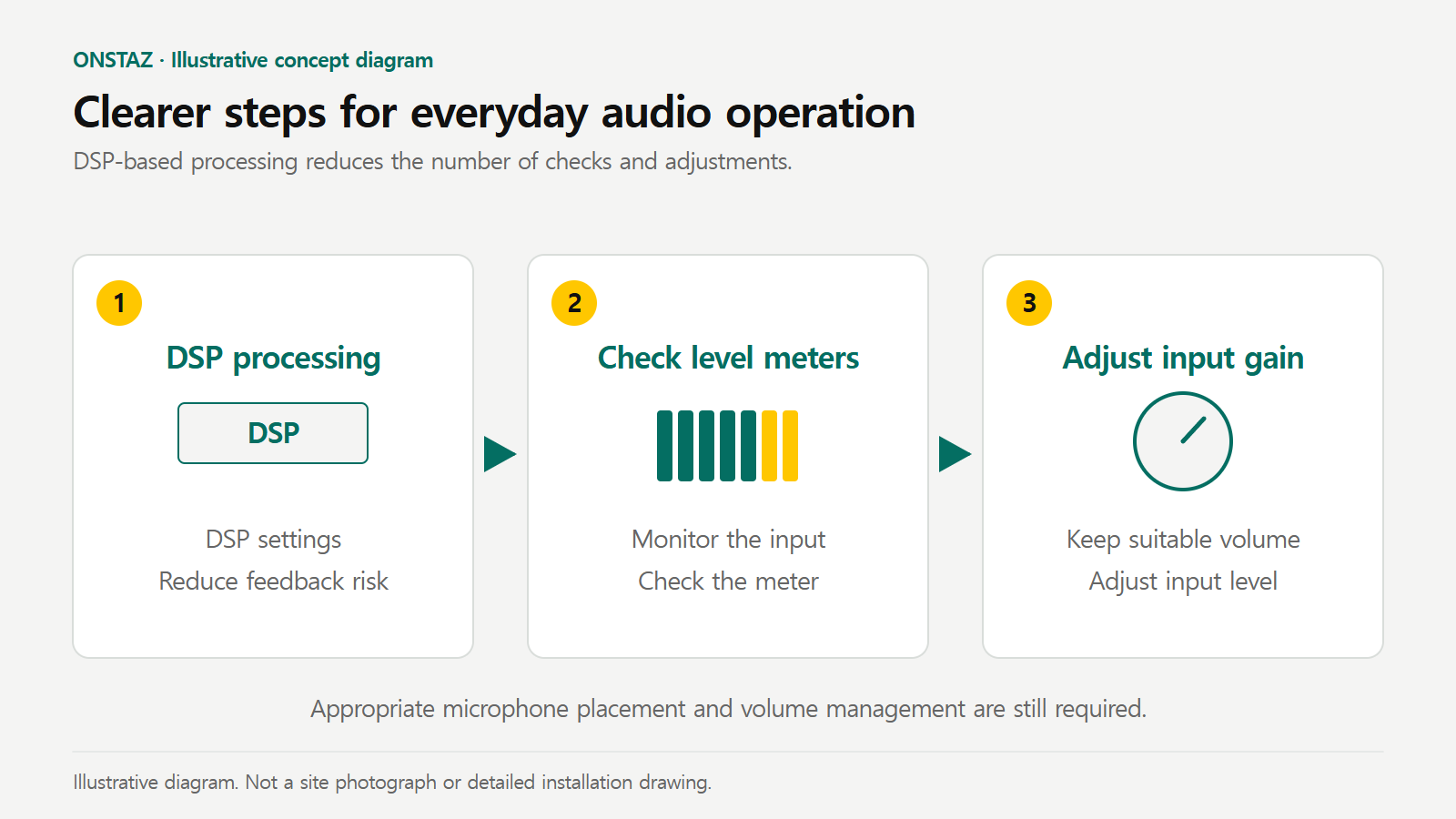
We applied DSP settings and basic audio processing to reduce microphone feedback, then simplified the workflow so staff could check the level meters and adjust the input gain as needed. The aim was to reduce the number of checks and adjustments required during an event, rather than ask staff to master a complex mixing console.
This lowered the training burden and reduced excessive dependence on the experience of a particular specialist. Feedback suppression still relies on appropriate microphone placement, volume management and other good operating practices; it does not mean feedback can never occur.
Project Results
The project connected equipment for a new hall with broader improvements to building operations. It combined lower monthly internet costs, TrueNAS-based business file management, integration of existing wired systems with network AV, and simpler DSP-centered audio operation.
Usable assets were retained, while the connectivity and management functions needed for future work were added to shared infrastructure. The new hall's design was intended to remain useful during later refurbishment, supporting a phased approach to improving the venue.
The ONSTAZ Approach
Good AV design does not end with an equipment list. It also considers how existing assets can be retained, how files and signals connect, who will operate the systems, and what can be reused during the next stage of work.
In wedding venue audio design, ONSTAZ considers audio, video and networking as one operating environment, designing sustainable systems around the venue's spaces and the people who use them.